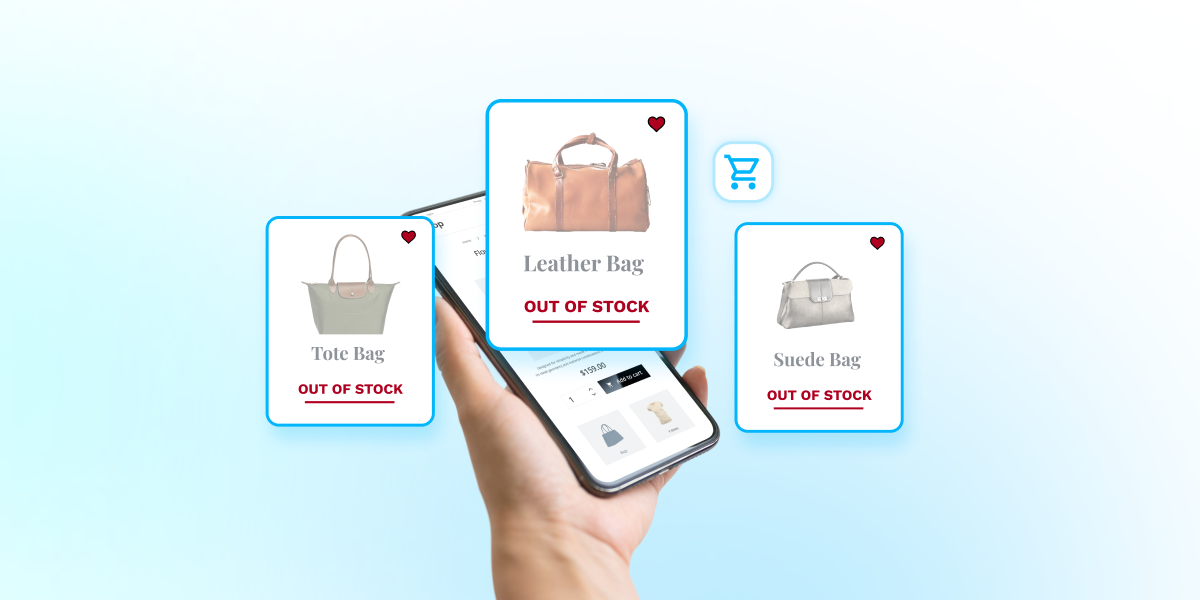
Few things kill a customer’s vibe faster than hitting “out of stock.”
They came to buy. They were ready to give you money. And your site basically said: “Sorry, we don’t actually know what we’re selling.”
That’s not just a lost sale. That’s a breakup in progress.
The hidden price tag of stockouts
Let’s be clear: stockouts don’t just hurt revenue. They bleed money in three sneaky ways:
🚪 Lost sales: Customers bounce straight to competitors.
💸 Refunds + churn: Overselling leads to cancelled orders and angry emails.
🕳️ Wasted CAC: You paid to bring them in… only to show them nothing to buy.
It’s like throwing a dinner party, spending a fortune on the invitations, and then forgetting to buy food.
Why blind spots happen
Most stockouts aren’t “bad luck.” They’re caused by fragmented systems.
🔢 Ops sees one number.
📈 Marketing sees another.
🧹 Service sees… nothing.
And the left hand never knows what the right hand is selling.
Enter: The one inventory model
The fix isn’t more spreadsheets or another bolt-on app. It’s one inventory ledger everyone can trust.
- Centralized truth: One record across all channels.
- Real-time sync: Every sale updates instantly.
- Shared visibility: Marketing, ops, and service all see the same number.
Suddenly, your business stops guessing what’s on the shelf — and starts knowing.
What it looks like in real life
- Checkout: No more selling ghosts. If it’s not in stock, it’s not in the cart.
- Marketing: Ads only promote what you can actually ship. (Imagine that!)
- Service: No more “sorry about your order” calls — they see live stock too.
When every department plays from the same score, the customer finally gets the smooth experience they expect.
The cost of doing nothing
Here’s the scary stat: IHL Group estimates stockouts cost retailers nearly $1 trillion a year.
Yes, trillion. With a “T.”
That’s not just inefficiency. That’s a giant donation to your competitors’ bottom line.
How to stop stockouts (without losing your mind)
- Audit refunds: How many are tied to overselling? (Spoiler: more than you think.)
- Trace the gaps: Where does inventory data break between channels?
- Unify the ledger: One system of record means no more blind spots.
- Start small: Pilot one high-volume SKU and watch the headaches vanish.
The bottom line
Stockouts don’t just kill profits — they kill trust. And once a customer feels burned, they don’t come back. Unified inventory isn’t flashy. But it’s the difference between scaling smoothly and bleeding money in the dark.
195613527164Book a demo of Maropost Unified Commerce today and protect every sale.